
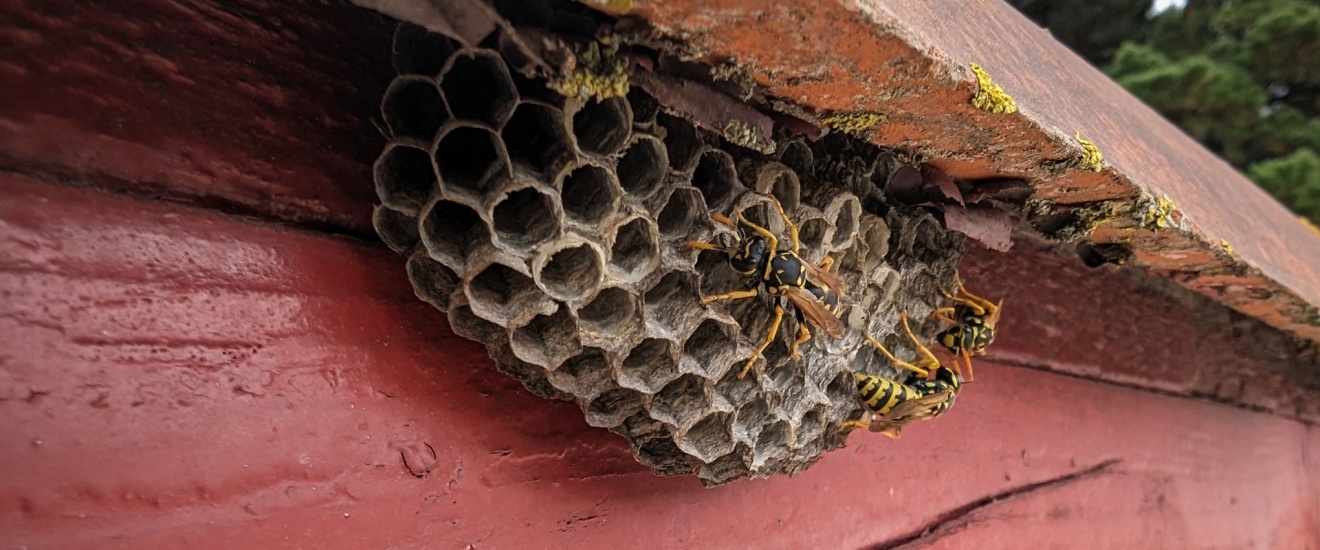
After treating properties across Whidbey Island, our team finds wasp nests in a fairly predictable set of locations. Knowing where to look helps homeowners spot a nest early, while it is still small and far easier to address. Our Whidbey Island pest control service encounters the same trouble spots again and again on local homes.
Under Eaves, Soffits, and Rooflines
The most common place to find wasp nests is under the eaves and along the rooflines of a house. Paper wasps favor these protected overhangs, where they build their open, umbrella-shaped nests shielded from rain and wind. Soffits, gable vents, and the corners where the roof meets the wall all provide the kind of sheltered overhead space these wasps prefer. Because these areas are often above eye level, nests here can grow surprisingly large before anyone notices them.
In the Ground and Low Spots
Yellowjackets frequently nest underground, taking over old rodent burrows or other cavities in the soil. Lawns, garden beds, the base of trees, and the edges of retaining walls are all common sites. A ground nest is easy to disturb accidentally while mowing or gardening, which makes it particularly hazardous. The entrance may be nothing more than a small hole in the lawn with a steady stream of insects coming and going, which is easy to miss until it is stepped on.
Inside Wall Voids and Attics
Wasps also nest inside the structure of a home, entering through gaps in siding, unsealed vents, or small openings around utility lines. Wall voids and attics offer dark, protected space where a colony can grow unseen. Homeowners sometimes notice these nests only when they hear a faint activity inside a wall or see wasps entering and exiting the same gap on the exterior of the house. Nests in these hidden spaces are especially difficult to remove without professional help.
Sheds, Decks, and Play Structures
Outbuildings and yard features provide many more nesting options. Common spots our technicians check include:
- Sheds, garages, and other outbuildings
- The underside of decks, porches, and stairs
- Playsets, trampolines, and outdoor furniture
- Dense shrubs, hedges, and trees
- Fence posts, mailboxes, and utility boxes
Because families spend time in and around these areas, a nest here poses a greater risk of an unexpected encounter. A nest tucked into a playset or the underside of a deck can go unseen until someone comes very close to it.
Catching Nests Early
Wasp nests are far easier and safer to deal with when they are found early in the season, before the colony grows large. Checking these common locations periodically through the spring and summer gives homeowners the best chance to catch a nest while it is still small and manageable. An active nest, however, should not be disturbed, particularly if it belongs to yellowjackets or hornets. Harbor Pest Control locates and removes wasp nests safely on properties throughout Whidbey Island. To have a nest inspected and removed safely, request a free estimate from our team before it grows any larger.