
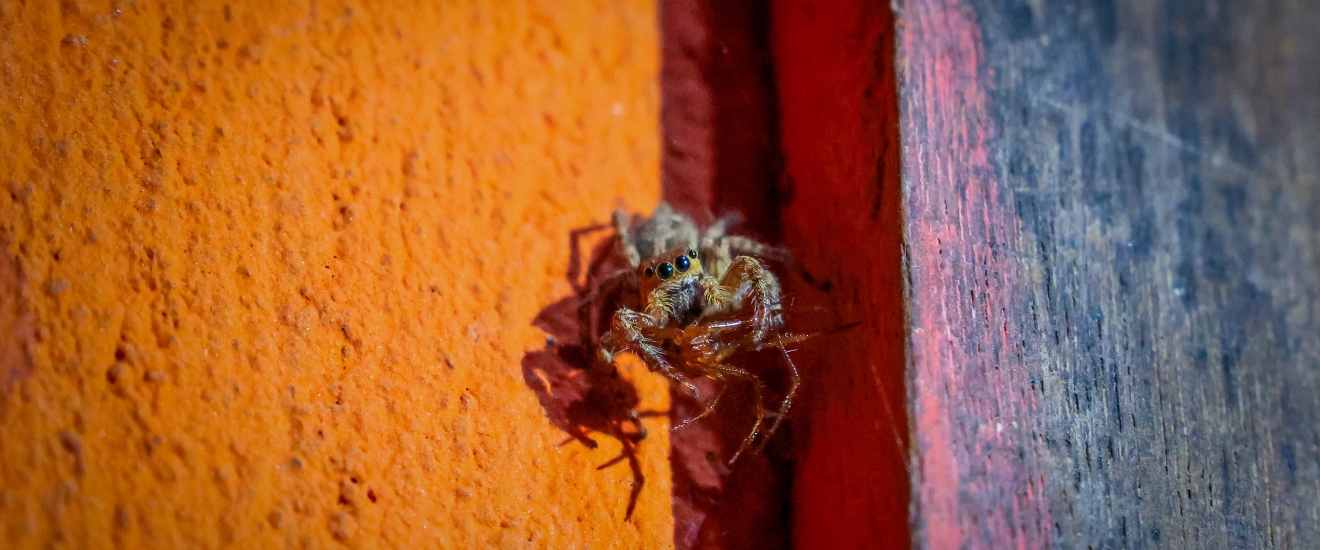
Most spiders you encounter in an Oak Harbor home pose a low medical risk, even when their size or quick movement is startling. A useful response begins with a reliable identification and sensible precautions around hidden spaces. Our spider control services focus on the spiders present, where they are living, and the conditions supporting them. That approach helps you address repeated encounters while keeping the actual level of concern in perspective.
Start With the Spiders Typical of the Region
House spiders, cellar spiders, jumping spiders, and several other familiar groups occur around western Washington buildings. They use different hunting strategies and shelters, but their presence usually calls for ordinary pest management rather than an emergency response. A large leg span can make a house spider look alarming without providing useful information about its venom or bite risk.
Spiders generally bite defensively when trapped or pressed against skin. Reaching into an unseen storage gap or putting on clothing where a spider has become trapped can create that kind of contact. Giving yourself a clear view of an area before handling items helps reduce accidental encounters. Gloves are useful when moving stored materials, gardening equipment, or debris.
A spider seen across a room presents a different situation from one trapped inside a glove. Observe it from a comfortable distance, keep children and pets away while you assess the situation, and avoid handling an unidentified spider. A photograph can be useful for identification without requiring direct contact.
Which Spider Claims Need a Closer Look?
What About Black Widows?
Black widows are medically significant spiders found in Washington, with a stronger association with the drier eastern part of the state. Around coastal western Washington, they are much less typical than ordinary house spiders. Geography helps guide the assessment, while a specific suspected specimen still requires careful identification.
Adult female widows often have a rounded, dark abdomen and a red marking on the underside. Markings can vary with age and sex, and the underside may be impossible to see safely. Several other spiders have rounded bodies or dark coloration. Treating a blurry silhouette as a confirmed widow can lead to an inaccurate conclusion.
If you find a spider that resembles a widow, leave it undisturbed and restrict access to that spot until it can be assessed. Take a photograph only if you can do so safely. Reaching beneath a shelf or turning a spider over to inspect its underside creates unnecessary contact. We can help evaluate the identification and the surrounding shelter.
Brown Recluse Claims Need Careful Scrutiny
Washington lies outside the brown recluse’s natural range. That makes an assumed brown recluse identification in an Oak Harbor home a claim that requires strong evidence. Many ordinary spiders are brown, and markings described as violin-shaped can be difficult to interpret accurately in photographs.
Transported specimens are a separate possibility from an established local population, but an unusual possibility should be evaluated through identification. Online image comparisons can encourage people to match broad features while missing the details an expert would examine. A clear photograph or safely collected specimen, obtained by someone equipped for the task, provides better evidence.
Skin symptoms also need their own medical assessment. Several conditions can produce redness, irritation, or a wound that someone suspects came from a spider. Identifying the cause of a skin lesion requires a medical assessment, even when someone has seen a spider elsewhere in the house. A clinician can evaluate the symptoms and decide what care is appropriate.
Hobo Spiders and Older Internet Advice
The hobo spider has been the subject of alarming claims about tissue-damaging bites. Current evidence supports considering it a spider of low medical concern. Older descriptions continue to circulate online, which can make a search for a brown spider more frightening than useful.
Hobo spiders belong to a group of funnel-weaving spiders, and related spiders can look similar. Accurate identification may involve details beyond the color and general body shape visible in a quick image. If the sighting is recurring, the location of webs and the conditions around them can guide pest management while identification is clarified.
For a home with repeated funnel-web activity in storage areas, we examine the shelter and insect food supply as well as the spider itself. Cleaning, reducing clutter, and addressing access can be useful parts of the response. The treatment recommendation should reflect the actual findings at the property.
If You Suspect a Bite
Wash the area gently with soap and water, and seek medical advice when symptoms are concerning, worsening, or associated with a suspected widow bite. Severe symptoms, such as trouble breathing or severe widespread pain, warrant emergency care. Medical professionals can assess the situation and provide instructions based on the person’s condition.
If a photograph is already available, it may help with identification. Your priority should be the affected person’s care, so leave risky capture attempts to trained personnel. Record when symptoms started and what you directly observed. Distinguishing an observed bite from a suspected one gives the clinician clearer information.
Pest control and medical care have separate roles. We can inspect the home and address spiders or conditions contributing to encounters. A healthcare professional evaluates the person and determines whether a skin change or other symptom needs treatment.
Reduce Encounters in Everyday Spaces
Keep storage organized enough that you can see where your hands are going. Check gloves, boots, and outdoor gear before use, especially after long storage. Remove accessible webs during cleaning, inspect screens and door seals, and look for insect activity near lights and windows. These steps help reduce the sheltered spaces and food sources spiders use.
If an unfamiliar spider or repeated indoor sightings are causing concern, ask us to inspect the problem area. We will help identify what is present and recommend practical control steps, giving you a clearer picture of the situation in your Oak Harbor home.